ANFFECC calls for a coherent regulatory framework to safeguard profitability and prevent relocations
The sector closed 2025 with turnover of €1,363.5 million and growth of 1.5% Exports account for 65.4% of total sales amid a stagnant domestic market The impact of the ETS exceeds €55 million, putting pressure on competitiveness
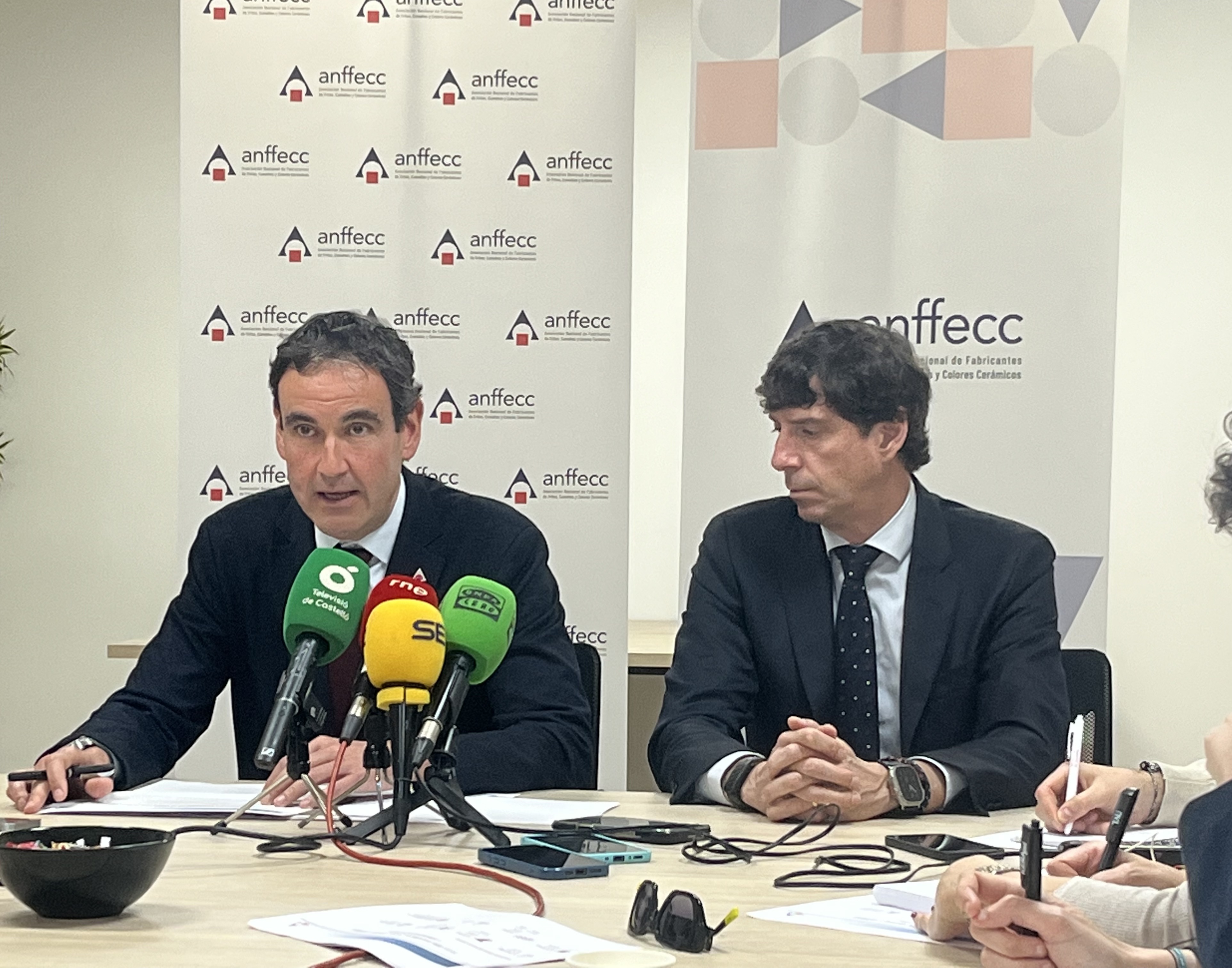
Castellón, 26 February 2026. ANFFECC presented today at its headquarters the annual data for 2025 and provided a detailed assessment of the situation of the ceramic frits, glazes and colours sector, which is going through a period of significant uncertainty after several years of accumulated tensions. The association analyzed the impact of energy costs, strategic raw materials and the European regulatory framework on industrial competitiveness.
According to the annual figures, member companies closed 2025 with total turnover of €1,363.5 million, an increase of 1.5% compared with 2024. Exports reached €891.4 million, growing by 2.7%, and represented 65.4% of total sales. The domestic market stood at €472.1 million, with a slight decline of 0.5%.
In terms of activity, total sector production remained stable in 2025 at 1.5 million tonnes, up 0.4% year on year. The association also highlights the maintenance of employment and skills: the sector supports 4,006 direct jobs, with growth of 0.6% in 2025. Behind these figures are knowledge-intensive companies, with one in four workers holding a university degree.
Cost pressure and tight margins
However, ANFFECC warns of growing pressure on competitiveness. “Cost pressure in energy and strategic raw materials is shaping the day-to-day reality of our companies. In some of them, increases have ranged from +30% to +177% in just a few months, with direct effects on margins,” says Fernando Fabra, President of ANFFECC.
The association has also quantified the impact of the EU Emissions Trading System at more than €55 million for the sector in the upcoming 2026-2030 period, as a result of the expected reduction in allocated allowances.
In this context, the association believes the risk of relocations continues to rise. “When Europe piles up costs and obligations above those of its competitors, investment decisions are postponed or redirected to other countries,” warns Fernando Fabra.